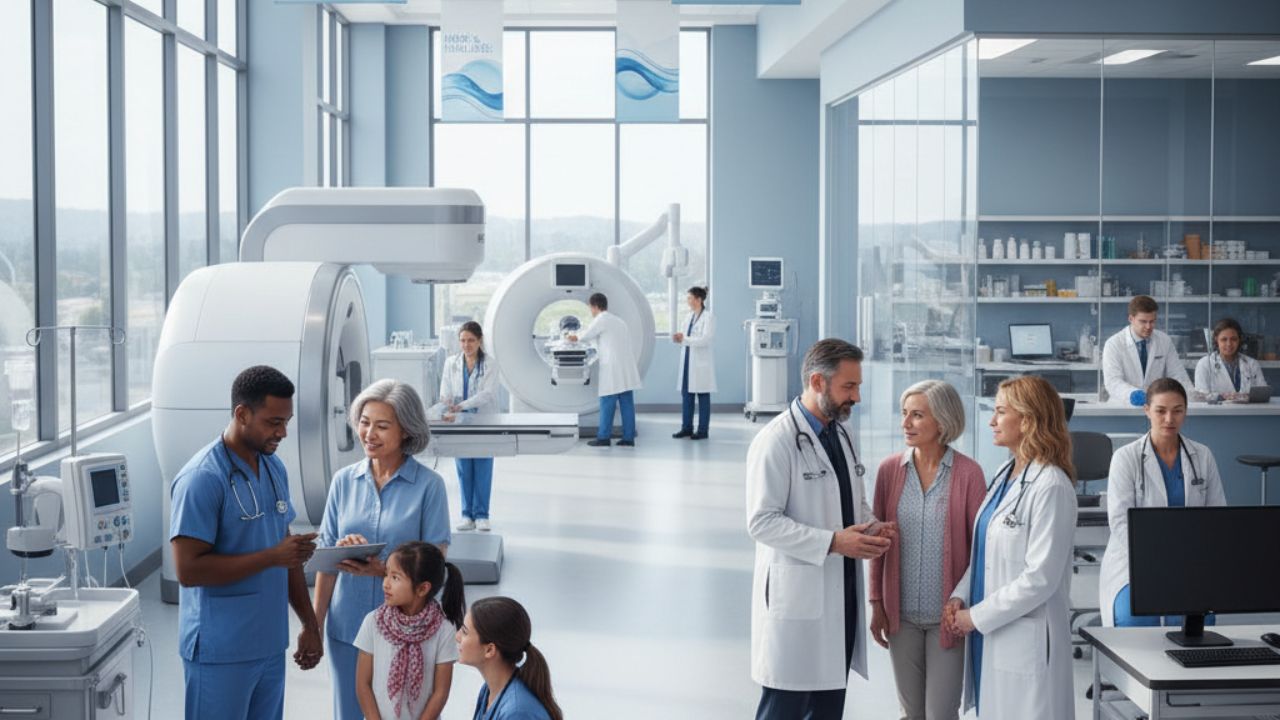
Receiving a cancer diagnosis is a life-altering event that brings a wave of emotions, questions, and difficult decisions. Perhaps the most critical decision you will face early in this journey is where to receive treatment. The hospital you choose determines not only the medical technology available to you but also the expertise of your care team, your access to clinical trials, and the quality of your daily support.
The United States is home to some of the most advanced medical institutions in the world. However, navigating the rankings and understanding what makes one facility “better” than another can be overwhelming when time is of the essence. This guide aims to simplify that process. We provide a comprehensive look at the top-rated cancer hospitals in the nation, the methodologies behind these rankings, and what you can expect regarding patient experience and innovative care.
How We Evaluate the Best Hospitals
Before looking at specific institutions, it is helpful to understand how hospitals are ranked. Identifying the “best” facility isn’t just about reputation; it relies on data-driven metrics that reflect patient outcomes and safety.
Rankings often rely on recognized authorities like U.S. News & World Report, which evaluates hospitals based on several critical factors:
- Survival Rates: This is the most heavily weighted factor. It measures the success of treatments and the ratio of patients who survive specific types of cancer compared to national averages.
- Patient Safety: This metric looks at the prevention of medical errors, infections, and complications during surgery or treatment.
- NCI Designation: The National Cancer Institute (NCI) designates certain hospitals as “Comprehensive Cancer Centers.” This gold standard indicates a facility demonstrates superior depth and breadth of research, as well as substantial transdisciplinary collaboration.
- Advanced Technologies: The availability of cutting-edge tools, such as proton therapy, robotic surgery, and advanced radiation oncology.
- Nurse Staffing: Higher nurse-to-patient ratios often correlate with better care and quicker recovery times.
Top 10 Cancer Treatment Hospitals in the USA
Based on consistent high performance in national rankings, clinical excellence, and research output, here are ten of the leading cancer treatment centers in the United States.
1. University of Texas MD Anderson Cancer Center (Houston, TX)
Consistently ranked as the number one cancer hospital in the nation, MD Anderson is exclusively dedicated to cancer care.
- Why it stands out: The sheer volume of patients allows doctors here to specialize deeply. You won’t just see an oncologist; you will see an oncologist who treats your specific subtype of cancer daily.
- Innovation: They are pioneers in the “Moon Shots Program,” an ambitious effort to accelerate the conversion of scientific discoveries into clinical advances that reduce cancer deaths.
2. Memorial Sloan Kettering Cancer Center (New York, NY)
Founded in 1884, MSK is the world’s oldest and largest private cancer center.
- Why it stands out: MSK is renowned for its personalized medicine approach. They use MSK-IMPACT, a targeted test that analyzes the genetic mutations in a patient’s tumor to match them with the most effective therapies.
- Patient Care: Their integrative medicine service is world-class, offering mind-body therapies alongside traditional chemotherapy and radiation.
3. Mayo Clinic (Rochester, MN)
The Mayo Clinic’s core philosophy is “the needs of the patient come first,” and they are famous for their integrated, collaborative model of care.
- Why it stands out: If you have a complex case involving other health conditions (comorbidities), Mayo is often the best choice. Their specialists across all medical fields collaborate seamlessly.
- Innovation: They are leaders in CAR-T cell therapy and other regenerative medicine approaches.
4. Dana-Farber/Brigham and Women’s Cancer Center (Boston, MA)
An affiliate of Harvard Medical School, Dana-Farber is a leader in both adult and pediatric cancer care.
- Why it stands out: They balance cutting-edge research with a deeply compassionate model of care known as “Total Patient Care.”
- Specialties: They are particularly renowned for their work in breast cancer and leukemia research.
5. Cleveland Clinic (Cleveland, OH)
While famous for cardiac care, the Cleveland Clinic is also a powerhouse in oncology.
- Why it stands out: Their Taussig Cancer Institute organizes care by disease site, meaning patients see a multidisciplinary team (surgeons, medical oncologists, radiologists) in a single location, often on the same day.
- Research: They are heavily involved in genomics research to predict which patients will respond best to immunotherapy.
6. Johns Hopkins Hospital (Baltimore, MD)
The Sidney Kimmel Comprehensive Cancer Center at Johns Hopkins is historically one of the most important research institutions in the world.
- Why it stands out: This is the birthplace of cancer genetics. Hopkins researchers were the first to map the cancer genome, leading to the genetic therapies used today.
- Patient Care: They offer extensive survivorship programs that help patients navigate life after treatment.
7. UCLA Health (Los Angeles, CA)
The Jonsson Comprehensive Cancer Center at UCLA is known for developing new therapies that become standard practice globally.
- Why it stands out: They are leaders in developing targeted therapies for melanoma and lung cancer. Herceptin, a life-saving drug for breast cancer, was developed here.
- Access: UCLA has a vast network of community clinics, bringing top-tier academic medicine into local neighborhoods.
8. Cedars-Sinai Medical Center (Los Angeles, CA)
Cedars-Sinai combines the resources of a major academic center with the personal touch of a community hospital.
- Why it stands out: They have invested heavily in minimally invasive surgical techniques, using robotics to reduce recovery time for cancer patients.
- Innovation: Their Samuel Oschin Comprehensive Cancer Institute focuses on “precision health,” tailoring prevention and treatment strategies to the individual’s genetic makeup.
9. UCSF Health (San Francisco, CA)
The UCSF Helen Diller Family Comprehensive Cancer Center is a leader on the West Coast, particularly in neuro-oncology and immunotherapy.
- Why it stands out: UCSF is at the forefront of brain tumor research. They also have a strong focus on cancer epidemiology, studying how lifestyle and environment affect cancer risk.
10. Hospitals of the University of Pennsylvania-Penn Presbyterian (Philadelphia, PA)
The Abramson Cancer Center at Penn Medicine is a global leader in immunotherapy.
- Why it stands out: In 2017, the FDA approved the first gene therapy for cancer (Kymriah), which was developed at Penn. They continue to lead the field in engineering the body’s immune system to fight cancer.
- Technology: They house one of the largest proton therapy centers in the world, offering precise radiation treatment that spares healthy tissue.
Spotlight on Research
The hospitals listed above do not just administer treatment; they invent it. Research is the backbone of top-tier cancer care. When you choose a major research hospital, you gain access to:
- Clinical Trials: These are studies that test new treatments not yet available to the public. For patients with late-stage or drug-resistant cancers, a clinical trial can offer a lifeline when standard protocols have failed.
- Translational Medicine: This is the practice of moving discoveries from the laboratory bench to the patient’s bedside as quickly as possible. Top hospitals have labs located within the same buildings as patient wards to facilitate this speed.
- Genomic Sequencing: Leading research centers now routinely sequence the DNA of a tumor. This allows doctors to identify specific mutations driving the cancer and prescribe drugs that target those specific glitches, rather than using a “one-size-fits-all” chemotherapy approach.
Navigating the Patient Experience
Clinical excellence is vital, but cancer treatment is also an emotional and physical marathon. The best hospitals recognize that healing involves the mind and spirit, not just the body.
Support Services
Top-tier hospitals utilize “Nurse Navigators.” These are specialized nurses who guide you through the complex healthcare system, helping schedule appointments, explaining diagnoses, and acting as a bridge between you and the surgical team.
Integrative Care
Facilities like Memorial Sloan Kettering and MD Anderson offer robust integrative medicine departments. Services often include:
- Acupuncture for pain and nausea management.
- Oncology nutritionists to help maintain weight and strength during chemo.
- Yoga and meditation classes to reduce anxiety.
Lodging and Logistics
Traveling for care is common. Top hospitals usually have partnerships with local hotels or offer their own patient lodging (like the Hope Lodge network) to make long-term stays more affordable and comfortable for families.
Access and Affordability
The cost of cancer care is a significant concern for most American families. Accessing the “best” hospitals often requires navigating complex insurance networks.
- Insurance Acceptance: Most NCI-designated centers accept major national insurance carriers, including Medicare. However, coverage for specific procedures or out-of-network doctors can vary.
- Financial Counselors: Top hospitals employ dedicated financial counselors. Before treatment begins, these professionals review your benefits, estimate out-of-pocket costs, and help apply for assistance.
- Financial Aid: many non-profit hospitals have charity care policies or patient assistance funds to help cover costs for those who are uninsured or underinsured. Never assume you cannot afford care at a top center without speaking to their financial aid office first.
Insights from the Experts
Leading oncologists emphasize that where you start your treatment matters. Dr. Stephen Hahn, former chief medical executive at MD Anderson, has noted in the past that getting the correct diagnosis and treatment plan right at the beginning is the single most important factor in survival.
Experts generally agree on the importance of “high-volume” centers. If you require complex surgery (such as for pancreatic or esophageal cancer), data shows that surgeons who perform the procedure frequently have significantly better outcomes than those who do it rarely. A top-tier hospital ensures you are in the hands of a specialist, not a generalist.
Current Trends in Cancer Treatment
The landscape of oncology is shifting rapidly. If you are researching hospitals now, you will likely encounter these three dominant trends:
- Precision Medicine: As mentioned, the era of treating cancer based solely on its location (lung, breast, colon) is ending. Treatment is increasingly based on the genetic driver of the tumor.
- Artificial Intelligence (AI): Hospitals are using AI to improve diagnostics. AI algorithms can now analyze radiology scans to detect micro-tumors that the human eye might miss, leading to earlier intervention.
- Telehealth Oncology: Post-pandemic, many top centers have maintained robust telehealth programs. This allows patients to consult with world-class experts for second opinions or follow-ups without the need for expensive travel.
Choosing the Right Hospital for You
While rankings are a helpful starting point, the “best” hospital is ultimately the one that aligns with your specific needs. Here is a checklist to help you decide:
- Check the Expertise: Does the hospital have a dedicated program for your specific type of cancer?
- Verify Insurance: Is the facility in-network?
- Location: Can you realistically travel there for weeks or months of treatment? If not, do they have a protocol for coordinating care with your local oncologist?
- Clinical Trials: If you have an advanced or rare cancer, ask specifically if they have open trials relevant to your diagnosis.
- Get a Second Opinion: You are rarely required to stick with the first hospital you visit. Getting a second opinion from a major academic center can confirm your treatment plan or open doors to new options.
Your health is your most valuable asset. Taking the time to research and select a facility that offers both cutting-edge science and compassionate care is the first step toward recovery.
Have you or a loved one received treatment at one of these facilities? Share your experiences in the comments below to help others navigating this difficult journey.